
Township News
Boston Township Trustees are accepting applications for the position of Road Superintendent. The job description is available on the website bostontownship.org or by emailing…
Notices
HELP WANTED: Road Superintendent - FILLED
Boston Township Trustees are accepting applications for the position of Road Superintendent. The job description is available on the website bostontownship.org or by emailing bostontownship@bostontownship.org.Accepting applications and resumes until August 1.Send your resume to: Boston Township Trustees, PO Box 123, Peninsula, OH 44264. JOB DESCRIPTION
Updated Zoning Resolution
NEW: The March 2025 version of the Boston Township Zoning Resolution is now available. Click here to access.NOPEC AVAILABILITY
Boston Township is a member of NOPEC’s natural gas aggregation program. NOPEC is a non-profit group of over 235 communities that negotiates lower utility rates. Residents can choose from a variety of rate plans including 12- and 24-month fixed term and monthly variable products. For more information, go to nopec.org or contact NOPEC’s Customer Care Center at 855-667-3201.SENIOR WATCH PROGRAM
Peninsula Police Department Senior Watch Program1582 Main Street, Peninsula, Ohio 44264
Office: 330-657-2995 After business hours: 330-657-2911
The Peninsula Police Department is implementing a Senior Watch Program. This program will benefit senior and/or disabled residents of the Village of Peninsula and the Township of Boston. An officer will make a phone call, or a brief visit to the residence on a regular basis, between the hours of 9:00 am and 1:00 pm, to check the well being, safety and security of the participants. Eligibility Requirements:Residents age 65 or older, who live alone, with no family close.Residents 65 or older who live with a family member who is bed-ridden, handicapped, or chronically ill.Any adult, regardless of age, who lives alone and is seriously and/or chronically ill, with no family close. For a printable Senior Watch Application form, click here. Complete it and mail to the Peninsula Police Department at the address given above. Or, stop at the Peninsula Town Hall to pick up a copy. This program is voluntary, and there is no fee charged to participants. To be a part of this program, you must fill out the Application Form, which will be kept at the Police Department all information will be kept confidential. Any questions, or concerns, please call the Senior Watch Officer, Priscilla Allaman at 330-657-2995.
Summit County
REVOLVING LOAN PROGRAM
Summit County business and start-up revolving loan program application information is available here.COX REPORT
The current State administration faced an increasing budget deficit three years ago, made worse by a shrinking economy. It was a new administration which had campaigned on consolidation of government, less is more, bigger units of government are lean and mean. It understood the banking business, which has no interest in how roads are plowed in winter.Ohio's current budget was balanced, as the law requires, by taking away from the townships fifty percent of their portion of a fraction of Ohio sales tax. The State said Townships could become "lean and mean" or consolidate.
That sales tax revenue is a tiny slice of state sales tax revenue and augments real estate taxes, the only tax a township can use to pay for services to residents. This revenue was taken from the most responsive and inexpensive form of government, the more than one thousand Ohio townships that respond quickly and directly to residents' needs. It is going to plug holes in a state budget that does not plow, pave roads or police our townships.
Townships are lean and mean: part time employees; old but well maintained equipment. Only services residents are willing to pay for. Less has been more since the inception of township government; state governments should take a look and a lesson.
The Cox Report tells how smaller government, township government is better for Ohio and how taking revenue away to force a change in services to residents is an error.
Links to the Cox Report:
Cox Report Summary
Cox Report Chart Brochure
complete Cox Report - Joanne Noragon
Zoning Board Meetings
Meetings of the Zoning Board and the BZA have been cancelled during the COVID-19 quarantine.Boston-Peninusal JEDD Meeting: UPDATE
A meeting of the Boston Township/Peninsula JEDD board will be held on Tuesday, May 28 at 6:00 PM to discuss the tax collection agreement.Meeting Cancelled
Boston Township Trustee Meeting for 09/27/23 has been cancelled due to illness. Next regular meeting is scheduled for 10/11/23 Sorry for the inconvenienceSpecial Meeting Notice
Notice is hereby given that a special meeting of the Board of Trustees of Boston Township will be held on Wednesday, July 6, 2022 at 6:00 PM in the Boston Township Meeting Room at the lower level of the Boston Town Hall, 1775 Main Street, Peninsula, OH 44264 for the purpose of accepting bid for 422 Resurfacing project.Peninsula JEDD Meeting
The annual meeting of the Peninsula-Boston Township JEDD board will be on February 26, 2020 at 7:00 PM at the Boston Township Meeting Room.Working Meeting
The trustees will hold a working meeting at 6:00 PM on Wednesday, December 18, 2019 to discuss insurance.Garbage Contract Bid
Boston Township is soliciting bids for garbage pickup for 2020. Bids are due to the Township Offices on October 23, 2019 at 6:00 PM. Download the Notice here. Download the specifications here.PUBLIC MEETING ON ZONING CHANGES
The Board of Trustees will hold a public meeting at 6:00 PM just prior to the regular meeting on September 11, 2019 to discuss recommendations for changes to the Zoning Resolution.Special Meeting Notice
Notice is hereby given that a special meeting of the Board of Trustees of Boston Township and representatives of the Village of Peninsula will be held on Tuesday, August 6, 2019 at 5:00 PM in the Boston Township Meeting Room at the lower level of the Boston Town Hall, 1775 Main Street, Peninsula, OH 44264 for the purpose of discussing the merger of road departments.Special Meeting Notice
Notice is hereby given that a special meeting of the Board of Trustees of Boston Township and representatives of the Village of Peninsula will be held on Monday, July 22, 2019 at 5:00 PM in the Boston Township Meeting Room at the lower level of the Boston Town Hall, 1775 Main Street, Peninsula, OH 44264 for the purpose of discussing the merger of road departments.Tag Sale at Boston Township!
Boston Township will hold a tag sale at the township garage at 1775 Main Street, Peninsula on Saturday, July 6, 2019 from 9:00 AM to 3:00 PM. Household items and old road signs will be for sale. Proceeds will benefit the general fund. Cash only. All sales final.Special Meeting Notice: Cancelled
The special meetings previously scheduled as indicated below have been cancelled until further notice. ORIGINAL NOTICE: The Boston Township Board of Trustees will hold special meetings on Wednesdays at 5:00 PM immediately prior to regularly scheduled board meetings until further notice to continue discussions with the Village of Peninsula regarding merging of road departments.Special Meeting Cancelled
The special meeting to discuss road department mergers on May 8 has been cancelled.Special Meetings Notice
The Boston Township Board of Trustees will hold a special meeting on Wednesday, April 10, 2019 at 5:00 PM to continue discussions with the Village of Peninsula regarding merging of road departments. Our regularly scheduled Board of Trustees meeting will be immediately after from 6:00 to 7:00 PM. A meeting of the Trustees of the Boston Township-Peninsula JEDD Board will be held at 7:00 PM after the regular board meeting.Special Meeting Notice
The board of trustees will hold a special meeting on March 27, 2019 at 5:00 PM in the Town Hall Meeting Room to discuss merging road departments with the Village of Peninsula.New Road Department Superintendent
Boston Township welcomes Dave Krusinski as Road Department Superintendent replacing Ron Adams who resigned earlier. Dave had worked in our Road Department as a college student.Emergency Meeting of the Trustees
The Boston Township Board of Trustees will hold an emergency meeting at 5:00 PM on December 21, 2018 in the Town Hall Meeting Room to discuss personnel issues.2018 Christmas Bazaar
The Annual Christmas Bazaar with antiques, food items, and crafts will be held on Saturday, December 1, 2018 from 10 AM to 4 PM in the Boston Township Hall. For more information, contact Amy Anderson at amyz1028@aol.com or by phone at 330-687-9498.Board Meeting Time Change!
Regular meetings of the Board of Trustees of Boston Township are now set for 6:00 PM on the second and fourth Wednesday of the month for the remainder of 2018, beginning with meeting on February 28, 2018.Special Meeting: January 30, 2018
A special meeting will be held on January 30, 2018 at 6:30 at the Boston Town Hall Meeting Room to discuss personnel issues.Community Christmas Bazaar
Join us on December 2, 2017 from 10 am to 2 pm for the Community Christmas Bazaar! Held in the Boston Township Hall at 1775 Main Street in Peninsula, the show will feature antiques, food items, and crafts.Meeting with County Representatives
The Boston Township Trustees will host an open meeting with representatives from the Summit County Fiscal Office on Tuesday, September 5, 2017 at 7:00 PM at the Boston Town Hall. Home owners will have the opportunity to speak with officials regarding the recent notice of property appraisals sent to residents.Mosquito Spraying
Spraying will begin at approximately 8:30pm and continue until completed. In the event of bad weather the spray schedule may be modified. The spray schedule can be viewed on the Summit County Public Health's website at www.scphoh.org.Rabies Vaccine Baiting Program for Raccoons and Skunks
The Summit County Combined General Health District, in collaboration with the USDA Division of Wildlife Services, will participate in a multi-county rabies vaccine baiting operation for raccoons and skunks. This operation is in response to raccoons and skunks testing positive for rabies in Lake, Geauga and Cuyahoga Counties in northeast Ohio since 2004, breaching the Ohio/Pennsylvania rabies vaccine barrier. The baiting is scheduled for August 25th through September 12th, 2014 weather permitting, in the communities of:Boston HeightsHudson, north of Route 303MacedoniaNorthfield CenterNorthfield VillageRemindervilleSagamore HillsTwinsburg CityTwinsburg TownshipThe Cuyahoga Valley National Recreation Area (CVNRA) will be baited by aircraft. The Ohio, Northern Pennsylvania, and West Virginia aerial rabies baiting operation will begin on August 25th. Communities that surround the park should be aware that pieces of bait may fall outside the park boundaries.Two types of baits will be used. One type of bait is a brown square block with a strong odor of fishmeal, an ingredient in animal feed which raccoons are attracted to. A plastic packet inside the block contains a red liquid with the vaccine. The second type of bait to be used is a new blister pack, made attractive to wildlife by a sweet coating that includes vegetable-based fats, wax, icing sugar, vegetable oil, artificial marshmallow flavor, and dark-green food-grade dye. The vaccine has been successfully used in Canada to vaccinate raccoons, skunks and foxes against rabies. An animal is vaccinated by eating bait containing the vaccine. The animal will develop antibodies in two to three weeks. These antibodies will protect the animal if it is exposed to another infected animal. If enough raccoons and skunks are vaccinated, the disease will be stopped.The bait is not harmful to people, pets or livestock. It is not possible to get rabies from the vaccine. Since the vaccine contains vaccinia virus, people with eczema and immuno-suppressed conditions may be prone to a local infection if the red liquid portion of the bait gets into a wound or abrasion. People who touch the bait should wear gloves or use a paper towel or plastic bag then use soap and water to wash any skin area exposed to the vaccine. If bait is found near homes, leave it alone if it is unbroken and in an area where pet or child contact is not likely. If the bait is out in the open or where contact by pets or children is possible, put on gloves or use a paper towel or plastic bag and toss it into deeper cover. The bait should not be touched by people less than 18 years of age, pregnant, or immuno-suppressed.Because additional baits may have been dropped nearby, check the area for more. Any other bait can be removed and placed where they are more likely to be found by a raccoon, not children or pets. This vaccine is approved only for use in wildlife and is intended for wild animals. A veterinarian, in accordance with state and local regulations, should vaccinate your pets. Pet vaccination is essential to protect your pet against rabies. Everyone can help by keeping their pets inside or on leashes during the baiting time and about five days afterwards. This will help prevent pets from getting the baits and it gives wildlife a chance to eat the baits. Also, keep garbage cans tightly closed. Open trash attracts wild or stray animals. Feed your pets indoors. Pet food left outside attracts wildlife. Important reminders:Be aware of what the bait looks likeTell your children about the wildlife vaccination program and tell them to leave any bait alone Keep dogs and cats inside or on leashes for several days after your area is baited. Most bait will be gone in about 3 daysDo not attempt to take bait away from your pet! That is the same as taking food away from an animal. You may be bitten.Baits may be picked up while wearing gloves, or with a plastic bag or towel.Do not handle partially eaten or damaged bait with bare hands.Damaged baits should be placed in a baggie and disposed of in normal trash.If you touch the bait or the red fluid inside the bait, thoroughly wash your hands or exposed skin with soap and waterCover garbage cans and do not leave pet food outdoors Call the Ohio Department of Health, Rabies Information Line (1-888-722-4371) to report any incidents or for further advice.For additional information, contact Andrew Deikun in the Environmental Health Division of Summit County Public Health at 330-926-5637 or 330-926-5668.Everyone Needs a Flu Vaccination, every year
Flu viruses are constantly changing, and different flu viruses circulate and cause illness each season. The annual flu vaccine is updated each year to protect against the flu viruses research indicates will be most common. This is why everyone needs a flu vaccine every year.Visit www.scphoh.org. for more information.Village of Peninsula, Police Department
CAUTION - DEER/CAR ACCIDENT FACTSThe state of Ohio recently ranked 4th in most insurance claims filed for deer related damage to motor vehicles.*1* Even more startling, 223 people nationwide died in 2010 from collisions involving deer.*2*
While efforts are underway to relieve overpopulation of deer, there are actions we as individuals can take to help the deer population. Feeding deer often worsens the problem, bringing them closer to residential area and lessening their fear of people.
As drivers, there are actions we can take to prevent a collision, or lessen our chance of injury. Drivers should be especially cautious during the months of November and December, when deer are mating. Deer are also very active between sundown and midnight, and again in the hours before and after sunrise. Drivers should use high beams at night whenever safe and practical. Slower speeds and being prepared to brake also will help prevent serious crashes. If a deer is in your path, brake evenly and do not swerve. Deer are unpredictable and generally swerving does not increase the chances of missing the deer, bud does greatly increase the chances of losing control of your vehicle.
Any collision involving a deer should be reported to the police. An injured deer can cause further collisions on the roadway, and most insurance companies will require a report to cover the insured automobile.
*1* State Farm Insurance
*2* Insurance Institute of Highway Safety - Ptl M. Phillips
Brush Pick Up
Brush pick up commences the first Monday in May and continues through October. Place cut ends toward curb. Please: no dirt or dirt balls, no foreign material such as lumber, nails, barbed wire. Thank you.Dominion East Ohio extended payment arrangement
Eligible Dominion East Ohio residential customers with fixed or low incomes may maintain their natural gas service by enrolling in the Percentage of Income Payment Plan (PIPP). This extended payment arrangement requires regulated gas and electric utilities to accept monthly payments based on a percentage of the customer's total household income.Beginning November 1, PIPP will become PIPP Plus and will help enrolled customers reduce their old debt faster while maintaining gas service, provided they make monthly payment in full by the due date. September billing statements will include a customer newletter that will explain the program changes to customers.
To qualify for either PIPP or PIPP Plus, total gross annual household income cannot exceed $16,245 for one person; $21.855 for two; $27,465 for three and $33,075 for four. For each additional household member, add $5,610.
If you need energy assistance, call the Ohio Department of Development at 1-800-282-0880 or visit www.development.ohio.gov.
Summit County Home Weatherizaton Assistance Program
The Summit County Home Weatherization Assistance Program, (HWAP), is a no-cost weatherization assistance program designed to reduce energy costs for low-income families with children, the elderly and citizens with disabilities by providing the following weatherization services:Safety Inspection, Tune-up/repair of combustion appliances (heating units, stoves, hot water tanks, etc.)
Inspection of electrical systems
Insulation of attics, sidewalls, heating ducts, floors or foundation perimeter and water heaters
Sealing of heating ducts
Reduction of air leakage from major sources
Personalized energy management plan
Information on how to control humidity in your home
HWAP works with other companies and agencies such as First Energy, Housewarming and Area Agency on Aging to provide weatherization services. The program also works in conjunction with the County of Summit Home Rehabilitation and loan program to better serve the needs of citizens of Summit County.
According to the State of Ohio Department of Development, after weatherization, households that heat with natural gas reduce space heating consumption by an average of 24.7%, and electrically heated homes reduce usage on average of 13%.
Studies show that when weatherization is combined with educating clients on home energy efficiency, residents can save up to 25% on their home heating bills.
Eligibility for the Home Weatherization Assistance Program is based on household income at or below 200% of the federal poverty level (see income table below). All families who have received assistance any time during the last twelve months under the Supplemental Security Income (SSI), or Home Energy Assistance Program (HEAP) are automatically eligible for weatherization services.
All services are based on the availability of funds. All qualified applicants are served based on a priority points system. Elderly and disabled persons receive additional priority points.
Household Size Total Gross Household Income
1............... up to $21,660
2............... up to $29,140
3............... up to $36,620
4............... up to $44,100
5............... up to $51,580
6............... up to $59,060
7................up to $66,540
8............... up to $74,020
To apply for the Home Weatherization Assistance Program contact the County of Summit Department of Community and Economic Development at 330-643-2537, or click on www.co.summit.oh.us/executive.dev.htm.
Turnpike Noise Abatement
Recap of meeting with the Ohio Turnpike Commission, January 14, 2010Attending:
L. George Distel, Executive Director ? OTC
Joseph A. Balog ? Chairman ? OTC
Douglas F. Hedrick, Assistant Chief Engineer ? OTC
Brian Williams ? Ohio State Representative
Nick Kostandaras ? Summit County Council
Jerry Ritch, Boston Township Trustee
The meeting was held at the Ohio Turnpike Commission, 682 Prospect Street, Berea, Ohio and started at 8:30 am.
The meeting was good in the sense that we did have the opportunity to meet with the top management of the Commission. However, minimal progress was made toward our goal for the immediate installation of some type of sound mitigation system. They made it clear and were very adamant about not having the money or funding, at this time, to do these kinds of projects.
They did agree that, unlike some other areas along the turnpike, the positioning of the third lane closer to our homes did create noise issues for residents. They also indicated that they felt some obligation to correct the problem and would make our area a priority (move us up on the list) when funding is available.
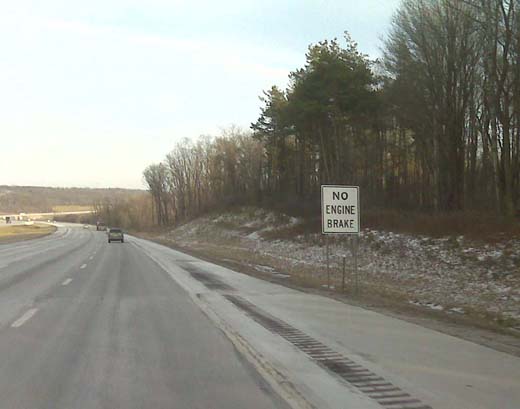
In addition, to provide immediate help in alleviating some of the noise problems they committed to posting, prior to the decent into the valley, No Engine Brake Signs and to enforcing the matter.
I feel that with the help from Nick Kostandaras and Brian Williams we can eventually get something done.
If you have any questions or comments please contact me at:
Phone:330-657-2015 jar15@msn.com. - Jerry Rtich, Trustee
Mosquito Spray Schedule
Spraying will begin at approximately 8:30 pm and continue until completed. In the event of bad weather the schedule may be modified.The spray schedule can also be viewed on the Summit County Public Health's website: www.scphoh.org.PENINSULA LIBRARY THANKS YOU FOR YOUR SUPPORT
The staff and Board of Trustees of the Peninsula Library would like to thank everyone who rallied behind the library and made calls or sent e-mails to our state government officials. As soon as the economy began to take a turn for the worse last fall, the library started to reduce spending. Anticipating a 20% reduction in income for 2009 due to the downturn in the state's economy, the library's budget was reduced accordingly. Less books and audio-visual materials were purchased, staff received no pay increases in 2009, and many other areas of the budget were pared down. In June, Governor Strickland proposed reducing funding to Ohio's libraries by an additional 30%, which when combined with the naturally occurring 20% reduction due to the bad economy, would have meant a 50% cut for Peninsula Library. Such a cut of this magnitude would have been devastating for the library and its loyal patrons. Through your communication efforts, our state officials have agreed to cut library funding by only 11% for the 2009-2011 Fiscal Year, bringing our total reduction for this upcoming two-year period to 31%. Up until this point, the budget cuts made by the library may not have been noticeable to our patrons. With this new round of budget cuts, the Board of Trustees will likely be forced to make significant reductions in terms of hours of operation and levels of service. We are confident that our patrons will understand the need to make these reductions and will continue to support the Peninsula Library as they have for over sixty-five years. As the days progress, we will be able to provide you with more specific information. Should you have any questions, please do not hesitate to contact the library. We value our patrons and are always striving to provide them with the best possible levels of service.GRANTS FOR SOLAR WATER HEATING AVAILABLE
Grants for installing water heater systems are available through Green Energy Ohio(GEO), a nonprofit organization dedicated to promoting economically and
environmentally sustainable energy policies and practices.
“There are very few solar water systems in Ohio,” said Athan Barkoukis, GEO
program manager. “We need more awareness about this program and to get more
people involved.”
Solar water systems can cost $8,000 to $12,000 for an existing building and a little
less for a newly built home, Barkoukis said. The grants are limited to owner-occupied
residential properties and will be awarded as long as money is available. The maximum rebate is $2,400 per applicant. The program does not specify or define residential properties so it could be open to duplexes, multi-family homes and rental property, Barkoukis said. Because of the limited funds in the program, however, GEO stipulated the property must be owner-occupied because it didn’t want one developer to obtain all the funds in the program. The program does not apply to apartments because they are considered commercial property. The state energy office in the Ohio Department of Development has a solar thermal grant program that provides funding for market rate and affordable multi-family housing units, such as apartment complexes.
Barkoukis said the GEO program was initially funded with $24,000 and GEO is
seeking more money to extend the program. He said 24 people have applied for grants
and about two thirds of those have been funded so far. He said more contractors are
being trained through programs at the state’s community colleges so they can be eligible to install the solar systems. “The more contractors who are certified helps expand knowledge about the program,” Barkoukis said.
Existing buildings that add a new system also can take advantage of federal and
state financial assistance programs. For example, a 30 percent federal tax credit for
systems installed before Dec. 31, 2016, is available.
One of the simplest and most economical ways to utilize solar energy is through
solar thermal systems, according to a GEO fact sheet. A solar residential hot water
system collects the sun’s energy on a flat, black plate, usually mounted on a roof. The
heat is transferred to water or another liquid flowing through pipes. The liquid is
pumped into the home and transfers the heat to water in a storage tank.
Typically, the system complements an existing electric or gas hot water system to
reduce utility costs. According to the U.S. Department of Energy, water heating can
account for 14 to 25 percent of the energy consumed in the home. A solar system can
provide 40 to 70 percent of a household’s annual hot water needs.
Rebate applications, which contain two parts, are available at:
www.greenenergyohio.org. The Web site also lists the minimum requirements and eligible installers, who must be approved by GEO.
ODOD PV Grant Program
In January 2009, the Ohio Department of Development reinstated a residential
solar photovoltaic (PV) grant program. The department’s Ohio Energy Office offers
grants on a first come first serve basis for the installation of new residential solar PV
systems in the service areas of American Electric Power, Dayton Power & Light, Duke
Energy and FirstEnergy.
The maximum incentive is $25,000. All systems must be installed at an Ohio site
that is the applicant’s primary residence. The system must be tied into the electric grid and have an output of at least two kilowatts. See the development department’s Web site for more information at www.odod.state.oh.us.
This article was taken from the February 2010 issue of Consumers’ Corner, published by the Office of the Ohio Consumers’ Counsel.
Cuyahoga Valley Historical Museum Winter 2009-2010 Exhibits
The Museum has two current exhibits:Peninsula Then and Now: A Sesquicentennial Portrait
and
Bits and Pieces: Unpuzzling our Past
The Museum is open Wednesdays, Fridays, Saturdays, Sundays: 12:00pm to 4:00 pm
(except major holidays)
Boston Township Hall, Second Floor
1775 Main Street
Peninsula, OH 44264
330-657-2892
All exhibits are FREE and open to the pubilc!
SPECIAL MEETING
Boston Township Trustees will hold a special meeting on Wednesday, May 6, 2026 at Boston Township Administrative Office, 1775 Main Street, Peninsula, OH 44264 at 5:00pmSpecial Meeting is to discuss hiring of a seasonal employee.Zoning Commission & BZA Meetings
The Zoning Commission and Board of Zoning Appeals will be holding a video meetings until further notice. If you're interested in joining please send your email address to the zoning inspector at: bostontwpzoning@gmail.com. Please send your request by 5:00pm the Monday before the meeting. You will then receive an email from the zoning inspector with the invite for the meeting on the day of the meeting just prior to the start of the meeting.Board Meetings During COVID-19
EFFECTIVE IMMEDIATELY: The Board of Trustees of Boston Township has determined that it may hold meetings by telephonic or other electronic means attendance of elected officials, until the current COVID-19 emergency by state, federal, and local governments is lifted. We will notify you when that emergency is lifted. Until that time, any or all township meetings may be attended by elected officials by telephone or other technological methods.Because there are four elected officials, and the health department has advised no more than ten people should be in a room at one time, the township will do the following: There will be six chairs provided in the meeting room all at least ten feet apart. At least one chair will be reserved for a news media representative. Members of the public who wish to attend these meetings will be admitted on a first come, first serve basis. Weather permitting, trustees will open doors and/or windows so that others may watch what has occurred at the meetings.These procedures will be lifted once the emergency is lifted.Road Assistant Applications
'Boston Township Trustees are accepting applications for the part-time position of Road Department Assistant. Send your resume to: Boston Township Trustees, PO Box 123, Peninsula, OH 44264. Accepting applications and resumes until 12/16/2020. JOB DESCRIPTIONHELP WANTED: Road Assistant
'Boston Township Trustees are accepting applications for the part-time position of Road Department Assistant. Send your resume to: Boston Township Trustees, PO Box 123, Peninsula, OH 44264. Accepting applications and resumes until January 14, 2019. JOB DESCRIPTION
Stormwater
Raindrops Keep Falling....
Do you know how many inches of rain are in a 10-year rain storm event, or if a 10-year rain storm event will cause local flooding? Most of us rely on our local Summit County stormwater professionals to keep track of this information, and use it to design practices which improve water quality and reduce flooding in our county and region. Now is a good time to focus on rain and explore some of the rainwater statistics that we often hear about but may not understand fully. Well-informed individuals make better decisions regarding the incorporation of measures that affect our communities' stormwater infrastructures.Storm events are measured in the amount of rain falling during a period lasting a prescribed number of hours and relate to the probability of the event occurring again in a certain time span, say for instance, 10, 25, or 100 years. For estimating rainfall events, hydrologists, (scientists who study the movement, distribution, and quality of the water on earth and other planets,) use "return periods." A return period is an estimate of how long it will be between rainfall events of a given magnitude in any given location. For example, the return period for a 3-hour rainfall with a total of 4.25 inches in a certain city is 25 years. This means that, on the average, a 4.25 inch rainfall lasting three hours occurs in that city once every 25 years. Of course, this information is based on statistics and there is no guarantee that once you have had this much rain, it will not happen again for another 25 years. If you had 100 years of records, there should be four such rainfall events (an average of one every 25 years.) These events could be in consecutive years or even multiple events in a single year, and there is also no guarantee that a nearby location will not experience such an event.
Each county in Ohio has a slightly different amount of rain in a 10, 25, and 100 year storm event. Generally, the farther south you travel, the more rain you can expect to receive. In Summit County, a 10-year storm event would produce approximately 3.4 inches of rain, a 25-year event would yield 4 inches, and a 100-year event would have a 4.4 inch rainfall, all in a 24-hour period.
Storm events are different from flood events. A 100-year storm will not necessarily create a 100-year flood. A rainstorm event is more localized and a flood event is more regionalized. The size of the area involved makes a great deal of difference. For instance, a 100-year storm in a small drainage basin or watershed of about one square mile would have a much greater effect on streamflow than the same storm in a 50 square mile basin. The term "100-year flood" is misleading because it leads people to believe that the flood happens only once every 100 years. A huge flood can happen in any year, even though it is less likely to. The term "100-year flood" is also a statistical designation and it means that there is a 1 in 100 chance that a flood this size will happen during any year. The actual number of years between floods of any given size varies a lot and big floods happen irregularly because the climate naturally varies over many years. A general rule-of-thumb for stream flooding is that a 3-hour rainfall total exceeding the 10-year return period is likely to cause some flooding. Whether or not a stream floods from the given rainfall amount (or less) is dependent upon a number of factors other than rainfall amount. Some of these factors are surrounding soil moisture, prior stream stage, (bank-full or floodplain spreading,) whether tributaries are already near flooding, amount of urbanization (impervious area), and basin and channel characteristics.
Floods are part of the natural cycle of every river and stream and benefit stream habitats by moving material downstream and renewing streambeds. As floods get bigger and spread farther, flood waters slow and deposit sediment on the floodplain. This natural process had created many fertile farmlands over the years. But the character of Ohio’s rivers, streams and ground water has changed greatly over the last 200 years due to human activities. Forests and prairie lands once kept our streams narrow and deep by holding the banks intact, and stream water was cooler and cleaner with a great diversity of species depending on it for life.
The changes we make to each watershed or drainage basin’s land use, changes the character of our streams. Agricultural fields and suburban lawns are often planted right up to the edge of the stream banks. This eliminates buffer or riparian zones which would slow down and filter the water. The loss of trees and their streambank root structures allow streams to run wider and shallower, causing sediment to be deposited and silt-over important biological habitat in the stream. Sediments and pollutants must be filtered from the water before it is used for drinking and other uses. Millions of dollars are spent each year for dredging sediment from channels, harbors, and reservoirs.
Urbanization increases impermeable surfaces, streets, roofs, and parking lots. Our streams receive greater amounts of runoff and the pollution that is carried with it over these land surfaces. Many streams have been straightened to allow water to flow faster. The increased runoff results in streambanks and beds being scoured with resulting erosion and sediment loss. Downstream flood damage also increases as streams carry more water at a faster rate.
The importance of watershed-based land use practices cannot be overestimated if we hope to restore our streams and rivers to some of their former health. Our stormwater professionals are able to use rainstorm statistics to help them design practices which will reverse some of the damage to our streams as a result of urbanization. These engineers and other stormwater specialists will also be using these facts to help them design practices that will prevent future damage to our streams and rivers. We as residents of Summit County can aid these efforts by remembering that all of our land use activities affect our stream environments, and making a conscious effort to engage in responsible watershed stewardship. For more information on healthy watershed practices, call Summit Soil and Water Conservation District at 330-929-2871, or go to the District website-www.summitswcd.org.
References: ODNR, USGS, Oklahoma Climatological Survey, USDA/NRCS, OSU Extension Service, Muskingum SWCD, (Ryan Fink), Hamilton SWCD, Clermont SWCD, (Paul Berringer)
Let's Celebrate 'Smaller Lawns for Water Quality'
Since July is the month we celebrate "Independence Day," it is a fine time to consider reducing the size of the turf-grass area of our lawns. By reducing the more impermeable turf-grass areas of our lawn, we have the opportunity not only to free ourselves from overwhelming yard work, but also to help improve water quality and our natural environment.We tend to think of hard, impervious surfaces such as paved streets, sidewalks, parking lots and roofs as the major culprits for conveying non-point source pollution in urban and suburban areas. In reality, large semi-pervious turf grass areas create a very efficient vector for sediments, pesticides, fertilizers, herbicides, yard wastes and other pollutants to travel along their merry way in sheet flow and end up as runoff in storm drains, streams, rivers, and lakes. So, instead of just cutting your lawn, cut it down to size. Reduce yard wastes and synthetic chemicals, and opt for cleaner air, soil, and water. Other benefits of less mowing are decreased air pollution and reduced chemical applications improves soil health.
When you are planning for the changes in your lawn-space, make sure that you set-aside enough turf-grass area for your recreational needs. For instance, if your family likes to play bocce ball, croquet, or badminton then you need to keep enough grassy area available for those uses. Once you have figured out how much turf-grass you need, then you can start your re-design project.
One of the easiest ways to shrink your lawn area is to use natural organic mulch for eliminating grassy areas under trees and shrubs. Applying mulch will also protect your plantings from damage caused by weed trimmers and mowers and will emphasize the shape and natural beauty of your featured trees and shrubs. Make sure that you know the source of your mulch if you are not using your own mulch or compost because commercial mulch may contain chemicals, insect pests, and invasive plant seeds. If you use plastic mulches for decorative purposes, keep them away from plantings since they can prevent air and water from entering plant root zones.
Place your mulch under the trees as far out as the end of the drip line, which is the area under the outermost branches. Mulching conserves moisture and also protects the soil, keeping it cool, allowing for more oxygen to be held in the soil, and enabling more rainwater to percolate through and stay on the land. Here is a word of warning: When mulching around trees, make sure that the mulch is not touching the trunk of the tree. Mulch that makes contact with or covers the trunk will smother the tree and also cause disease due to insects or fungus which may be in the mulch. We have all seen 'Volcano' mulching and it is definitely not healthy for your plantings. According to the Arbor Day Foundation, the maximum depth of the mulch around trees and shrubs should be 3 to 4 inches.
You can also use mulch to enlarge your planting beds. Use a mulch layer to create a one to two foot wide margin between your lawn and shrubs, rather than having turf-grass run right up to the edge of your plants. You will be pleasantly surprised with the positive aesthetic result.
Before you apply mulch anywhere on your lawn, you need to remove the turf-grass in your chosen areas. Rather than manually toiling to remove the grass by digging it out, or applying toxic chemicals which will kill the grass and the organisms in the soil, you can use a simple and cheap method to smother the grass. You can use either newspaper or cardboard as a layer under the mulch. Flattened old cardboard boxes work best and will not blow around like newspaper, which needs to be about 20 sheets thick for best results. Both materials will provide an organic "blanket" to smother grass and weeds, and will decompose after several months. After you put your blanket layer in place, you can start spreading your choice of organic mulch about four to six inches deep. Just think! No more grass, weeds, or mowing! Mulch is free if you make your own compost, and your community or public utility may also offer free or inexpensive mulch locally.
If you would like to reduce your turf grass even more, then you might consider the use of ground covers. Ground covers might seem expensive in the beginning, but are less costly than turf grass in the long run, and once native ground covers are in place they will continue to spread and thrive with minimum annual maintenance. (Make sure that you plant native species and not invasive exotics.) By pairing herbaceous ground covers with mulch or compost, you can cover a large area in a short time. It makes sense to plant the ground cover on top of the mulch because some ground covers die back in the winter months, leaving bare soil exposed to erosion, unless it is covered by mulch. For sunny areas you can use hardy drought-resistant ground covers such as creeping juniper which won't die back in the winter months, leaving the soil uncovered.
For information on suitable native herbaceous groundcovers for Ohio, click here, and for information on native evergreen groundcovers, click here .
An important place to look at eliminating grass is at the front of your property where you might want to install a raingarden. A raingarden is an attractive, landscaped area planted with perennial native plants which don't mind getting their "feet wet." They are beautiful gardens built in depressions, designed to capture and filter storm water runoff from impervious surfaces around the home, such as rooftops and driveways, before the runoff reaches the storm drain. Besides providing improvements to water quality, raingardens attract beneficial insects and other pollinators, and add curb appeal and help to increase property value. For more information on rain gardens and other environmentally friendly lawn practices click here.
Now that you have decreased your lawn size substantially, it is time to think about planting more trees if you have room. Because trees are the largest of plants, they provide great environmental benefits. For instance, a mature River Birch with a 30 inch diameter trunk will annually soak up 3,764 gallons of stormwater, reduce atmospheric carbon by 653 pounds, conserve 321 kilowatt/hours, and be a gorgeous addition to your yard, adding to curb appeal and property value. If you do decide to plant a tree or two, make sure to choose trees that are right for your landscape conditions and plant well away from overhead power lines, underground utilities, plumbing, foundations and septic systems. If you have concerns about underground utilities and need to 'Call Before You Dig,' click here.
Some trees have special conditions. For instance, Black Walnut trees give off substances that will keep any other plant from growing nearby, and would not be a good choice for a tiny, crowded lot with many existing plantings. To find out more about native Ohio trees and good choices for your personal turf-grass reduction plan, click here.
If you start planning this summer, you can begin to reduce your lawn by next spring. By working on the reduction gradually, you may also keep from alarming your neighbors who are firmly tied to the idea of huge turf-grassed areas. By the time they notice your new environmentally friendly landscape plan and see how beautiful it is, you will be well on your way to saving time and money and helping to improve air, soil, and water quality for your watershed and the rest of our home, Mother Earth. For more information on healthy landscaping practices, native plants, and soil and water quality, contact the Summit Soil and Water Conservation District at phone number (330) 929-2871, fax number, (330) 929-2872, staff@summitswcd.org, or go to http://www.summitswcd.org, and also check out our facebook page at: https://www.facebook.com/pages/Summit-Soil-and-Water-Conservation-District/170451803004991.
References:
Department of Environmental Protection/Montgomery County, Maryland
Ohio State University Extension
Ohio Department of Natural Resources/Division of Forestry
The Nature Conservancy
National Tree Benefit Calculator/Davey Tree/Casey Tree
United States Department of Agriculture/Plants
Natural Resources Conservation Service
Ohio Utilities Protection Service
The Grass is Always Greener When You 'Grasscycle'
Do you know that you can maintain a healthier lawn, save money, and protect the environment, all at the same time when you use "Grasscycling" as one of your healthy landscaping practices? The term "Grass-cycling" simply means leaving your grass clippings on the lawn, instead of sweeping them into the street, or bagging them for dumping in the nearest landfill.While most people know not to pour oil down a storm drain they may not realize that sweeping grass clippings down a storm drain can also be harmful to the environment. Just think about the total effect on our lakes and streams if grass clippings from every yard in the area ended up in the nearest lake or stream.
When grass clippings end up in the street, they are picked up by storm water runoff and carried down the storm drain path into the nearest stream or lake. The grass clippings introduce excess nitrogen into surface waters, causing ugly and potentially harmful algal blooms. When the algae decompose, they use up all of the available oxygen, fish and aquatic animals cannot survive and a "dead zone" is created.
We also dump over four million tons of grass clippings and other yard waste into landfills annually. The collection and disposal cost is about $100.00 per ton, so keeping grass clippings on the lawn is both an environmentally, and economically, a sound idea.
Grass clippings are a valuable organic product, which can add vigor and durability to your lawn. Clippings left on the lawn recycle nutrients, saving you about 25% of your annual fertilizer costs. Every garbage bag full of grass clippings contains up to ¼ lb. of useable nitrogen, a valuable soil nutrient. You can avoid or eliminate the use of fertilizers and other lawn chemicals by allowing soil organisms to return these nutrients to the soil. You should also have your soil tested to see what other nutrients you may need, and in what amounts. This will keep you from over-fertilizing, save you money, and will also protect our valuable water supply.
Grasscycling is an uncomplicated, affordable, lawn care practice. Mow your grass when it is dry and keep it 3-4 inches high. This method puts more nutrients into the roots, allowing your lawn to have a larger and deeper root system, which will protect it against weeds and droughts. Always keep mower blades sharp. By mid-summer, mower blades have become dull and this causes stress to the lawn. Sharp mower blades equal happy grass blades. A sharp blade and frequent mowing will produce finer clippings that will decompose quickly. If you have problems using your mower without the bagger, call your dealer for assistance.
You can reduce your mowing time by 25-30% by leaving clippings on the lawn. You will also eliminate raking, emptying mower bags, trips to the curb, and purchasing lawn trash bags. You don't have to worry about an unsightly appearance, because frequent mowing or using a mulching mower produces short clippings which disappear rapidly, since the mowed blades of grass are recut and forced down into the base of the lawn. Grass clippings usually disappear completely in less than a month, depending on temperature and moisture conditions.
If you don't want to leave them on the lawn, you can compost grass clippings. First, make sure to check your local ordinances to see if composting is permitted in your community. If you just have grass clippings in your compost pile, they will mat together, depriving the composting microbes of oxygen and causing a bad odor. Make sure you add leaves and sticks to the clippings in a ratio of three parts leaves to one-part grass clippings. Turning the compost with a pitchfork frequently will add oxygen to the compost and eliminate odors. You can sift your compost with a screen and add ½ inch as a top dressing on your lawn, to maintain healthier turf. For more information on composting you may contact the Summit Soil and Water Conservation District at (330) 929-2871.
Finally, if your lawn is planted with cool season grass, such as Kentucky Bluegrass, you can reduce your mowing time and expenses as well as your water use, by allowing your lawn to go dormant.
Dormancy is a natural survival mechanism for turfgrasses. While dormant, the crowns (and roots) of grass plants are live, but existing leaf blades become dead and brown and no new leaves are produced. Generally, turfgrass can remain dormant for 4 to 6 weeks, without significant damage to the plants. Actively growing Kentucky bluegrass lawns require up to 1.5 inches of water per week, while a dormant bluegrass lawn requires only 0.5 inches of water every two weeks. A light watering or rainfall of 0.5 inches every two weeks, supplies enough moisture to keep crowns, rhizomes, and roots, hydrated and alive. This low volume of water will not rejuvenate a dormant lawn, but it will help to insure good recovery once rainfall occurs again in the fall. If the dry weather persists, then water the lawn if it has been dormant for 4 to 6 weeks. Apply 1 to 1 ½ inches of water in a single application. This will not cause the grass to green up, but it will keep the turfgrass crowns and roots alive. If the dry conditions continue, then water every four weeks. It is also important to avoid excess foot and mechanical traffic while the lawn is dormant. Dormant lawns do not require mowing since they do not generate new leaf blades to replace the damaged ones, but excess traffic causes the existing foliage to break down and wear away. Once the foliage is gone, continued traffic begins to injure plant crowns resulting in weakening or death.
So instead of tossing those grass clippings in the landfill or sweeping them to the storm drain, put them to good use. In nature, everything that happens is part of a cycle, and one organism's waste is another organism's food or shelter. If we think about our own home environment as part of the larger ecosystem, we can learn to use practices that are beneficial not only to our small corner of the world, but to the whole planet that we share. For more information on these and other healthy landscaping practices, call Summit Soil and Water Conservation District, at 330-929-2871, or click here.
References:
The Ohio State University Extension Horticulture
California Integrated Waste Management Board
Cornell University Cooperative Extension of Westchester County
Purdue University
United States Department of Agriculture
Natural Resources Conservation Service
University of Nebraska-Lincoln Extension Horticulture
Iowa State University Extension Horticulture
Medina Soil and Water Conservation District
Trees Work Hard For Conservation in Urban Environments!
Here is a link that fits the theme this year of the Summit Soil & Water Conservation District: "Taking Root for Clean Water." The Conservation Crusader video stresses the importance of trees in water conservation and is available at:Trees-Work-Hard-For-Conservation-in-Urban-Environments
MAKING DEICERS A LITTLE NICER
Rock salt and other deicers can pollute waterways and harm plants and animals, consider these options to help keep your sidewalks and drives less slippery this winter.Shoveling is a safer alternative, if your health permits it, to throwing handfuls of rock salt. But if you opt to use a deicer do so sparingly, and apply it just before a storm hits to prevent ice from forming. More is required once sidewalks are slick.High concentrations of rock salt can stunt or kill plants and pollute rivers and streams through storm runoff which ultimately can harm birds and fish. Sand or kitty litter can also be used, but in areas where sedimentation in streams is an issue, these to become problematic, unless homeowners take responsibility for sweeping them up before they run into area waterways. If you cannot get away from a chemical deicer, look for liquid rather than granular forms that cover a larger surface. Buying deicers made from all natural products such as corn or beet is much better for the environment because they contain less chloride. If you have multiple doors to your house, consider using only one in winter to avoid clearing other paths. Remember, everybody should be mindful of how their daily lives affect waterways. - Ron Adams
New Year-New Lawn Attitude
When you look out your window at all the snow and ice, it doesn't seem possible that spring is just around the corner. But the daffodils and tulips will be peeking out very soon, so you need to start planning this year's landscaping projects. The beginning of the new year is the ideal time to do yourself and the environment a favor and make a New Year's resolution to re-define your lawn with water quality in mind.Lawns have become a status symbol and homeowners spend thousands of dollars a year to have a perfect lawn, one that is green, lush, and weed free. But the "perfect" lawn can become an ecological wasteland that does not sustain pollinators or promote ecological diversity in wildlife. This type of lawn still must be catered to, covered in fertilizers and pesticides, costing the homeowner money and all the while putting humans and animals at risk due to exposure to the lawn chemicals used. Additionally, these chemicals on the lawn get washed into storm drains polluting our rivers and lakes and initiating harmful algal blooms which foul the water and cause sickness and even death. The soil underneath this lawn is poor and devoid of live because soil organisms are unable to survive in the chemical soup they are exposed to The lawn as we know it today is an environmental disaster. It's time to redefine your lawn. So, instead of just cutting your lawn, cut it down to size. Reduce yard wastes and synthetic chemicals and opt for cleaner air, soil and water.
When you are planning for the changes in your lawn-space, make sure that you set-aside enough turf-grass area for your recreational needs. For instance, if your family like to play bocce ball, croquet, or badminton then you need to keep enough grassy area available for those uses. Once you have figured out how much turf-grass you really need, you can start your redesign project.
There are many ways to shrink the turf-grass area of your lawn. One of the best ways is to plant native grasses, flowering plants, shrubs, and trees.
After the last glacier retreated from "The Glaciated Allegany Plateau", twelve to fourteen thousand years ago, our native plants came to us in various ways. Some seeds were carried by wind and water. Others were carried as nuts and seeds, eaten and released by birds and animals. Some plants gradually crept up from our southern regions, each year gaining a few inches of ground to grow on. Some were carried sticking to the feathers, fur, scales, and fins, of our fellow creatures. Our native pollinators, bats, birds, bees, butterflies, moths, and other mammals and insects, carried the pollen far away. Later on, Native Americans carried and dispersed seeds in their ravels. The record of all these means of succession is preserved in centuries' worth of Ohio muck. Now, in the twenty-first century, we are fortunate to have so many varieties of native plants that we can use to redesign our yards and eliminate some of the less permeable turf-grass area.
Native plants are hardy and can be planted in Rain Gardens, Prairie Gardens, Pollinator Gardens, flowerbeds, and anywhere on your lawn where you would like to reduce the size of the turn-grass area.
Rain gardens add beauty and property value to any setting. But did you know that rain gardens help to prevent flooding. A rain garden in your yard provides a depression which stores water, allowing the water to percolate slowly into the soil. The extremely long roots of the native plants are much longer than those of cultivated turf grasses, (as long as fifteen feet in some cases,) have more surface area, and therefore can hold more water and filter out more pollutants.
A prairie garden can be planted in any unused area of your lawn. Native prairie plant seeds are available from local sources. Prairie grasses will grow tall, so it is best to check your local weed ordinances, and you may want to stick with prairie wildflowers. Once your prairie garden is established you can trim a strip around the perimeter to define the garden so it doesn't look overgrown and upset your neighbors.
Pollinator gardens that attract birds, butterflies, and many other insects and pollinators, can be placed anywhere in your yard to create beauty and biological diversity. The pollinators, including beneficial insects,, have developed alongside these plants for many generations. These beneficial insects also save money and the environment by keeping your yard free of harmful insects without the use of pesticides.
Planting native plants in your flowerbeds will give you the added advantage of knowing that these plants will come back year after year in the same spot, and will also re-seed themselves and expand. Your can rely on your garden design lasting until you decide to make a change.
These perennial plants are low maintenance and because they have developed in our soils and climate, they thrive without the application of fertilizer, thereby decreasing pollution in our sheet flow and storm water runoff. Native plants also prevent soil erosion with long roots which hold the soil in place and thee plants improve soil health, providing food and spaces for water and air to percolate. Native plants use less water and that saves money and watering time. They do not require mowing, and this reduces carbon dioxide emissions and the use of precious fuel, not to mention the cost of expensive mowing equipment. Native plants in the yard also provide valuable habitat including food, cover, nesting and egg-laying areas, and traveling corridors for mammals, birds, insects, reptiles, amphibians, and many other creatures.
For more information, please contact: Summit Soil and Water Conservation District, 2525 State Road, Cuyahoga Falls, Ohio, 44223.
Phone: 330-926-2452. Fax: 330-929-2872.
www.summitswcd.org
Urban Trees-Our Roadside Warriors
Did you know that planting trees in your own yard or elsewhere in your community, can actually help to reduce stress?Have you ever travelled for miles over interstate highways, with nothing to see but utility poles and billboards, and then taken the exit ramp and all of a sudden, end up in some picturesque little town with tree-lined streets? Well if you have, then you will remember the feeling of calm that came over you.
You might have been thinking I wish our town looked like this. Studies (*1) have shown that trees reduce stress and contribute to a general sense of well-being, by reducing blood pressure levels and relieving muscle tension.
Roadside trees and green landscaping can reduce driver stress and aggression, calm traffic and reduce accidents. This is just one benefit that trees provide for us.
Here are some of the many advantages you will receive when you plant trees:
* Trees improve water quality and help to prevent stormwater runoff and flooding.
* Trees act like sponges, filtering out pollutants and storing water in their root systems. A red oak with a trunk diameter of 30 inches will filter and hold 4,700 gallons of stormwater runoff in one year.
* Trees intercept and hold rain on leaves, branches, and bark. A single blue spruce with a 12 inch diameter will intercept and hold 1,150 gallons of stormwater annually.
* Tree roots hold the soil in place and prevent sediments (a major component of non-point source pollution) from washing away into rivers and streams.
Trees increase property values and curb appeal.
* A sugar maple whose trunk is 12 inches in diameter will provide $33.00 in added property value each year.
*Trees save you money.
* Trees reduce energy costs when they shade buildings in summer, block winds in winter, cool sidewalks, and add moisture to the air. The same sugar maple planted on your tree lawn can reduce your energy bills by as much as $50.00 a year.
* Trees reduce automobile fuel costs. Vehicles parked in shade use less fuel to cool down in summer and warm up in winter.
* Trees reduce watering expenses. Established trees need less water than lawns and their shade can reduce the water needs of other landscape plants.
* Shade from trees extends the life of paved surfaces, including roofs.
* Trees can make us healthier, happier, smarter, and safer.
* Trees capture air pollution and breathe out oxygen. A 12 inch diameter sugar maple will reduce atmospheric carbon by 502 pounds annually.
* Hospital patients with views of greenery instead of a brick wall were found to spend 8.5 fewer days in recovery.
* Shade from trees helps reduce incidence of skin cancer by intercepting ultra-violet rays.
* Urban areas with trees and other greenery have less crime than those without trees.
* Trees around homes and schools improve self-discipline and reduce symptoms of ADHD (*2).
* Tree lawns are perceived by residents to mean more walkable streets. A study of urban adults in Europe found that residents in areas with the highest levels of greenery were three times more likely to be physically active and 40% less likely to be overweight than those living in the least green settings.
* Trees contribute to wildlife health and species diversity.
* Trees provide food, habitat, travelling corridors, migration resting sites, and nesting sites for many wildlife species.
* Tree canopy over streams keeps the water cool and able to hold more oxygen, which, in turn, supports an abundant array of aquatic life.
* Vegetated buffers around streams filter out pollutants and prevent them from entering the stream.
Trees are referred to as Roadside Warriors(in a 2011 Columbus Dispatch article (*3) that talks about a tree planting project in Gahanna, Ohio.) Urban trees stand guard and protect us from environmental hazards by absorbing these stressors themselves.
Trees and urban forest are important for our health, our economy, and our environment. Healthy forest canopy reduces flooding, absorbs stormwater, interrupts runoff and is essential for clean water and healthy streams, rivers, wetlands and lakes.
We are losing trees in our cities at an alarming rate and according to Ohio State University horticulture professor, Hannah Mathers. By the year 2030, only 10% of the world's forest cover will be left. Urban forests will be most of what we have left.
If each of us planted a tree this year, our urban forest would provide much more protection in 2030 and beyond and our town might end up looking like the little town we passed through on our trip. For more information on the benefits of trees, you can go to: www.treebenefits.com/calculator. or call Summit Soil and Water Conservation District at (330) 929-2871.
Footnotes:
*1-Ulrich, Science, 1984, 1985
*2-Taylor, Kuo & Sullivan, Journal of Environmental Psychology: Environment & Behavior.
*3-Columbus Dispatch, Friday, June 17, 2011, by Lauren Hepler
References:
Citizen ForesTree, Cuyahoga River Rap, Cuyahoga ReLeaf, Ohio Environmental Education Fund
Woods for Watersheds, Cuyahoga River Rap, Cuyahoga ReLeaf, Ohio Environmental Education Fund
Tree City USA Bulletin No. 57, Arbor Day Foundation
DON'T GUESS! SOIL TEST!
Start your 20013lawn and garden program off in the right direction. All lawn and garden fertilization programs should begin with a soil test. The test will tell you which nutrients may be deficient in your soil. Soil tests provide specific fertilizer recommendations for your lawn and/or garden, and can help you avoid over-application of fertilizer.Fertilizers are one source of non-point source pollution, which accounts for 60% of the water quality problems in Ohio. When it rains, excess fertilizer runs off the lawn into the storm sewers or ditches, and ultimately ends up in our rivers and lakes. Problems resulting from excess fertilizers in our surface waters include poor storm water quality, dead fish and aquatic animals, weed-choked lakes, loss of habitat and species diversity, and flooding.
A soil test will tell you which nutrients you need, and what ratios to use when applying, so that you don�t add an excess of any nutrient. The standard soil test provides information on phosphorous (P), potassium (K), calcium (Ca), magnesium (Mg), pH, cation exchange capacity, lime requirement, and base saturation. Additional tests are also available for iron (Fe), zinc (Zn), manganese (Mn), soluble salts, and nitrates.
Phosphorous occurs naturally in our soils, in adequate and sometimes excessive, amounts. This is especially true for the glacial till soils of Summit County in this northeast Ohio region. Since this nutrient is often associated with algal blooms and water quality problems, why add additional amounts to your lawn if it is not necessary? Save yourself some money and do something good for the environment by choosing the fertilizer that best suits your soil needs.
Summit Soil and Water Conservation District is once again offering Soil Test Kits for sale at our office. There will be a charge of $12.00 per kit. Our staff will be on hand at the time of purchase, to explain how to use the kits to test your soil. For more information, please contact Summit SWCD at www.summitswcd.org or call 330-929-2871.
Composting For a Healthy Yard
Stop! Before you dump your twigs and leaves and other fall and winter lawn debris down the storm drain or in the landfill, consider this environmentally friendly idea. Start a compost pile or bin and leave your yard waste on your land. Composting is a simple, economical way to recycle your household scraps and yard trimmings into a nutritious meal for your soil and your landscape, not to mention the beneficial insects and microorganisms that will also feast on it.Composting makes sense, because it keeps useful organic materials from filling up the local landfill. In some states, it is now against the law to put organic materials in the landfill, since they are relatively clean and biodegradable, and take up needed space. Another reason to compost is the reward of saving money by having a free soil enhancement, which can be used on your landscape, garden, or shared with your neighbor. All organic materials decompose. Composting hastens the process by providing an ideal environment for bacteria and other decomposers to thrive. These microorganisms need four elements to do their work: nitrogen, water, carbon, and oxygen. For the best results, mix high-nitrogen materials like clover and fresh grass clippings with high-carbon materials like dried leaves and twigs. Adding wood chips to branches and twigs allows more oxygen to get into the pile and adds a nice fragrance. Rainwater provides moisture, or you can water and cover the pile with a tarp, to keep it moist, if rainfall is in short supply. Turning and mixing the pile lets the oxygen in. To start, you can use a simple pile, a barrel or bin, or you can build a frame from old lumber, bricks, and chicken wire, so there is a minimal expense involved. There are also a variety of prefabricated composting bins available at your local hardware, lawn and garden store, or via the internet. If you prefer, composting can be done inside your garage or shed.
There are two methods of composting: cold composting and hot composting.Cold composting works well for those who have little time and not a great deal of yard waste. Start with dried leaves on the ground and add grass clippings. Then just add yard waste as you do your lawn maintenance. The only drawback with this method is that you may have to wait several months to a year for the compost to be ready to use. Hot composting takes more work, but you can have useable compost in about four weeks. Start out with level ground and lay boards or branches down, evenly spaced to create air circulation. Spread out several inches of high-carbon, (brown) material and add high-nitrogen (green) material and mix together. You can do this in a bin or a pile as well. Water as necessary but don't let your pile become soggy. Too much water will harm the microorganisms, and the pile will rot and smell. The bacteria can do their best work in a mixture of 20-30 times as much brown material as green material, (carbon to nitrogen). A pile, which measures 3ft. x 3ft. x 3ft., works best, but don't let it get taller than 5 feet. Punch holes in the sides to let the air circulate. Your pile will heat up and cool down, so start turning material when the temperature drops. Move the compost from the center to the outside and vice-versa, just like stirring a cake batter in a bowl. Turning every day or two will give you a finished product in less than four weeks. Turning every other week will give results in one to three months.
Here are some materials that you can safely add to your compost pile: cardboard rolls, eggshells, gray cardboard boxes, sawdust, vacuum cleaner lint, clean paper, fireplace ashes, hair, shredded newspaper, vegetable trimmings, fruit scraps, (be sure to microwave non-native fruit peels such as banana peels, because they may contain non-native microorganisms,) coffee grounds and filters, fur, leaves and grass, tea bags, wool and cotton rags. Items that you would not include would be: Black walnut leaves and twigs, (they are toxic to tomato plants), egg yolks, meat scraps, and dairy products, (attract flies,) oils and grease, (create bad odors,) pesticides, (will kill microorganisms and concentrate in the compost,) and pet waste, (attracts flies and may carry disease microorganisms.)
When your compost is ready to use, it will be a uniform, dark brown, crumbly material which looks and feels like rich, earthy-smelling garden soil. You need to let it cool for a few days before using it. Compost can be used to amend and enrich your garden soil and landscaping beds. It can even be used in house plant pots and window boxes. Compost enhances soil texture, increases the ability of the soil to absorb air and water, limits weed growth, helps stop erosion, and lessens the need for chemical fertilizers.
So instead of tossing those grass clippings in the stream where their decomposition will add unwanted nutrients and use up oxygen needed by aquatic creatures, put them to good use to enhance everyone's environment. In nature, everything that happens is part of a cycle, and one creature's waste is another creature's food or shelter. If we think about our own home environment as part of the larger ecosystem, we can learn to use practices that are beneficial to not only our small corner, but to the whole planet that we share.
References:
www.purdue.edu. Backyard Conservation, USDA-NRCS, NACD, Wildlife Habitat Council, (available on our website at www.summitswcd.org.)
A Tale of Two Trees-The "Country" Tree and the "City" Tree
You may be familiar with the story of the "City Mouse" and the "Country Mouse," one of the ancient Greek "Aesop's Fables." In this story, the country mouse flees back to his quiet life in the woods, to get away from his cousin's "hard" life in the city.Well, city trees face similar problems but are not able to escape. Urban trees live a "hard" life, surrounded by hard impervious surfaces and urban infrastructure that impact their root systems, and other conditions that don't have to be endured by their country cousins that live in forested natural rural habitats.
Removal of permanent vegetation such as trees, shrubs, and grasses, by urbanization, increases the amount of runoff into streams and lakes. This rapidly moving runoff creates flooding and transports high levels of sediments, attached pollutants, and dissolved contaminants into our surface waters.
Increased runoff also causes streambank erosion, which results in degraded aquatic habitats and the accelerated deposition of sediments into rivers, lakes, and reservoirs. When rain moves rapidly off the land there is no time for recharging soil moisture or maintaining ground water levels.
Urban trees are capable of "Hard Work" in restoring and providing many important ecological services if they are selected, planted, and maintained properly. Here are some of these services.
@ Non-Point Source Pollution: Trees, along with shrubs and grasses planted in bio-swales, wetlands, and forested riparian buffers can filter out pollutants as they slow and capture runoff.
@ Stormwater Management: Conventional stormwater pipes just move the problem downstream, but the re-establishment of natural vegetation throughout a watershed will reduce the amount of stormwater runoff. For example:
A Northern Red Oak tree with a dbh (diameter at breast height) of 30 inches located in Cuyahoga Falls, can reduce runoff by 3,030 gallons annually.
To find out how much stormwater your favorite tree can soak up you can use the "I-Tree" calculator available at: www.treebenefits.com/calculator/ReturnValues.cfm?climatezone=Midwest.
@ Streambank & Steep Slope Stability: While sod and ground cover hold topsoil in place, tree roots penetrate deeply and spread out, anchoring large blocks of soil. Densely planted trees and shrubs on fragile soils and slopes that are prone to erosion, work to keep foot traffic, bicycles, and motor vehicles from damaging these slopes.
@ Waste Treatment: Tree plantations irrigated with wastewater from a treatment plant use nutrients in the effluent that would otherwise pollute streams.
@ Sanitary Landfills: Trees planted around Sanitary Landfills trap blowing debris and keep the litter out of streams and lakes.
In the current trend of ever-expanding community development we must all realize that what is done by one resident or business can affect the whole community and watershed. The cumulative effects of many individual actions can have significant impact on the overall landscape. We need to understand the value and benefits of urban trees and incorporate them into our personal and community plans so that they have the ability to function properly and provide the maximum stormwater quality and other environmental improvements.
Trees clean the air and water, give protection from the wind, create green space for recreational and educational opportunities, and improve the view from our homes. Tree canopy in urban areas lowers the temperature of the concrete surfaces which would otherwise be heated up by the direct sunlight, and keeps the city scape cooler on a hot day.
Trees along streams cool the water, provide food for aquatic organisms, provide food, shelter and travel corridors for wildlife, add structure to the stream channel and stabilize stream banks and steep slopes. It is up to us to incorporate urban trees into our lives so that they can perform their functions and accomplish their "hard" work.
For more information on trees and water quality, you may contact your county's Soil and Water Conservation District, (SWCD) or OSU Extension office.
You may also contact your local community to see if there is a community arborist available to assist you.
Other sources include, Ohio Department of Natural Resources, Division of Forestry, the Ohio State University Extension, the Natural Resource Conservation Service, and the U.S. Forest Service.
Sources include:
United States Department of Agriculture (USDA) National Agroforestry Center
Unites States Forestry Service
Natural Resource Conservation Service (NRCS)
Healthy Household Habits for Healthy Waters
It`s a new year and time to make the usual `New Year`s Resolutions.` Besides making commitments to improve personal health habits, let`s resolve to improve watershed health habits. We can control and decrease our environmental footprint and improve the quality of our waters by practicing `Green Housekeeping,` or `Environmentally Friendly` habits at home.There are many sources for pollution to enter our streams and lakes. Point-source pollution from an industrial plant, producing a chemical or thermal discharge, may be discovered quickly and terminated. On the other hand, non-point source pollution entering our waterways is difficult to pin-point because it is a combination of many substances that come from the total watershed area.
Toxic pollution is one type of non-point source pollution that is cause for major health concerns in our waters. The improper use and disposal of household chemicals contributes to this toxic pollution. Common household products such as cleaners, dyes, and paints containing hazardous materials that can pose a threat to humans, animals, plants, and the environment in general, especially if not handled or disposed of properly.
There are some steps that you can take in your household to lessen the harmful effects of these hazardous products:
Make it a point to research and educate yourself about the chemicals in the products that you already have in your home.
Whenever possible, use up the product or donate it to someone who can use it. Even products that have been stored for several years can still be effective if used according to label directions.
Learn how to make your own cleaning products which do not contain harmful substances.
When you absolutely need a hazardous product for a particular job, buy the smallest amount needed for the task.
Always follow directions carefully when using any hazardous product.
Make sure that you never mix harmful chemicals and/or wastes together.
Keep toxic materials in their original containers with proper labels and directions for safe disposal.
Find out how to properly dispose of all of these products. Even harmless substances can pose a threat if combined with other materials and not properly disposed of. The Ohio EPA, the US EPA, and the Summit Akron Solid Waste Management Authority are all sources of credible information on product contents and proper disposal. These agencies can also inform you of disposal sites and event times.
Never dispose of toxic materials into a storm sewer where they can end up in a stream or lake.
Never put toxic substances into a septic system. These materials can leach into and contaminate ground water supplies. Toxic chemicals can also end up in streams, because the ground water will intercept the surface water and replenish the streams.
Never flush pharmaceuticals and other toxic materials down the toilet even if you are hooked up to the sanitary sewer system. The water from your toilet will go to the wastewater treatment plant and end up in the stream after treatment. The wastewater treatment systems are not equipped to treat toxic materials and pharmaceuticals, so these harmful wastes go into the water virtually untouched. Toxic chemicals will cause biological damage to fish and other aquatic organisms and will also contaminate the drinking water supply.
Finally, you can encourage your local officials to hold hazardous material collections, and most importantly, you can volunteer to help out.
Listed here are some examples of hazardous products that may be found in different areas of your home, along with best practices for safe disposal.
Living Room: Paint: Small amounts of paint can be hardened by removing the lid and adding sand or cat litter. Once the paint is solid, you may put it in the trash. Full cans of unused paint may be donated to `Habitat for Humanity` or a similar organization. Never pour paint down the storm drain or down the drains in your home.
Bathroom: Cleaners: Bathroom cleaners that contain phosphates present a water pollution hazard so make sure that you dispose of the sealed containers in the trash or recycle them if possible.
Garage: Motor Oil: Used motor oil is easily recycled at any number of local service stations. A convenient way to store used oil for recycling is to pour it into clean used milk jugs or other gallon containers. Be sure it is properly labeled.
Kitchen: Window & Glass Cleaners: These products typically contain ammonia or alcohol. Unused portions of window or glass cleaner should be flushed down the drain with plenty of water.
Basement or Storage Shed: Solvents: Solvents like paint thinners, turpentine, varnish, and furniture stripper can be re-used after you allow the solid particles to settle out. You can empty the sludge in the trash. If you have large amounts of solvents (more than 10 gallons), you should take them to a recycler. Never dump solvents down a toilet, sanitary or storm sewer, or onto the soil.
The above-mentioned products are just a few of the typical household materials that will cause serious water-pollution problems if handled and disposed of improperly. We must all do our part to make sure that harmful substances do not enter our streams and lakes where they can have a harmful effect on the water quality of all of our shared waters.
You can contact your local Summit Akron Solid Waste Management Authority (SASWMA) in Summit County at 330-374-0383, or on-line at www.saswma.org., for more information on proper disposal. You can also reach the Ohio Environmental Protection Agency, Northeast District Office, at 330-963-1200, or go to www.epa.ohio.gov.dsiwm/pages/general.aspx. for the Division of Materials and Waste Management. If you call the Summit SWCD at 330-929-2871, we will direct you to an organization that will assist you.
“The Road to Water Quality” in Summit County
You have heard about the “road paved with good intentions” and where that leads. The road leading to Water Quality in Summit County is also paved, but with impervious surfaces. So even though we have the “good intentions” needed to improve our water quality, our efforts are definitely hampered by the sheer magnitude of the hard, impervious surfaces in our largely urban county.Impervious surfaces such as rooftops driveways, streets, and parking lots, prevent rain and snow melt from soaking into the soil. In our urban environment, developed areas are designed so that storm water runs off these hard surfaces carrying attached soil and pollutants, to ditches and storm drains and eventually to nearby receiving rivers, lakes, and streams.
Once in the lake or stream, sediments, and pollutants including pesticides, automotive fluids, and fertilizer, accumulate and negatively impact water quality and the aquatic environment. Fish and invertebrates lose habitat, food, and nesting sites. Algae grow explosively and then decompose, using up all of the oxygen, and creating a “dead zone” where no organisms can live.
In Summit County, 55 percent of the population depends on surface waters for its water supply. The other 45 percent depends on groundwater, which is held in underground rock layers called aquifers. During a rain event, the rainwater that soaks into the soil replenishes or “recharges” the groundwater supply. In our urbanized communities, impervious surfaces and storm sewer systems prevent water from soaking into the soil, and the groundwater supply is depleted.
So we must put our good intentions to work and take steps to reduce the amount of rainwater that runs off our land into the storm drains. The ideal to strive for, according to the Ohio EPA, is “zero stormwater discharge” from our property. How can this be achieved? Be assured, there are measures that we, as citizens of Summit County, can take to reduce impervious surfaces, which will encourage infiltration and reduce runoff. Here are some ideas for healthy storm water practices that we all can put into action.
If you are building a new home, consider the “Low Impact Development” options for water retention on your property. Reduce your hard surface footprint by opting for a smaller home, use pervious pavers or porous concrete for your walkways, patio and driveways, amend soils to encourage infiltration, and plant with native grasses, trees and shrubs, which will hold and store water, keeping it on the land. Try adding a raingarden or bioretention cell to your landscape.
If you are already in your home, replace existing sidewalks, patios and driveways with pervious pavers, or porous asphalt or concrete. Installing any of these products will allow more rainwater to soak into your soil and will also increase your property value. Many of the landscape ideas mentioned above can also be done with your existing property.
Install a rainbarrel. (Check your local ordinances to make sure that you can disconnect your downspouts.) A standard rainbarrel can hold 50-60 gallons of water at a time. The nitrogen-rich rainwater is great for watering your landscape and garden and is also good for your budget.
Aerate your lawn to make the surface more porous and draw water to the plant roots, instead of letting the water escape as runoff.
Plant trees. Trees intercept water and store it, reducing storm water runoff and flooding. Trees planted along waterways can remove over 75 percent of the nitrates in the ground water before the pollutants reach the waterways. A typical medium sized tree can intercept as much as 2,380 gallons of rainfall per year.
Leave grass clippings on your lawn or compost them with your leaves. You can use the compost as mulch to spread over your lawn. Mulch helps to lower soil temperature, and cooler soil stores larger volumes of water.
Install a raingarden with native plants. A raingarden, one-third of an acre in size, can hold and filter 60,000 gallons of rainwater, before it enters the surface or ground water.
Plant streamside and pond perimeter plant buffers to help redirect storm water runoff and filter pollutants.
In Your Community
Visit Low Impact Development sites in our county to learn more about these practices and see them in action. The Metro Parks Seiberling Nature Realm in Akron with its green roof and porous concrete and pavers in the parking lot is a good place to start your tour.
Join a local watershed organization to combine your efforts with others for a positive impact in your own watershed.
To find out more about these and other stormwater retention practices, call Summit Soil and Water Conservation District at 330-929-2871, or go to www.summitswcd.org.
Keeping Excess Nutrients out of our Streams and Groundwater
The autumn season has arrived once again. This is often the season when many residents spend a great deal of time and money feeding their lawns and gardens with fertilizer to beautify the landscape next spring. Even though this application of fertilizers is well-intentioned, it can cause harm to the environment if overdone. Grasses and other plants take up the nutrients that they need. The excess fertilizer attaches to soil particles, where it may wash away in stormwater runoff, and end up in our streams, lakes, and groundwater, where it does a great deal of damage.When fertilizers containing nitrogen, phosphorous, and other elements enter our surface waters, the result is an “algal bloom,” which can cover the entire surface of the water body. The algae prevent sunlight from reaching the plants growing on the bottom, no photosynthesis takes place, and the plants die. These submergent plants are the beginning of the food chain and so the fish and aquatic insects lose their food source. When the algae eventually die and decompose, the oxygen in the water is used up by the decomposer bacteria, and the fish and other inhabitants are deprived of oxygen as well. Fish kills often result from this situation. This process is called “eutrophication” and an “anoxic” or “dead zone” is created.
The recent “United States Geological Survey” news release from September 23, 2010, stated that “Elevated concentrations of nitrogen and phosphorus, nutrients that can negatively impact aquatic ecosystems and human health, have remained the same or increased in many streams and aquifers across the Nation since the early 1990’s.” “This USGS report provides the most comprehensive national-scale assessment to date of nitrogen and phosphorus in our streams and groundwater. For years we have known that these same nutrients in high concentrations have resulted in ‘dead zones.’ Now we have improved science-based explanations of when, where, and how elevated concentrations reach our streams and aquifers and affect aquatic life and the quality of our drinking water.” “Despite major Federal, state and local efforts and expenditures to control sources and movement of nutrients within our Nation’s watersheds, national-scale progress was not evident in the assessment.” “According to the U.S. Environmental Protection Agency, nutrient pollution has consistently ranked as one of the top three causes of degradation in U.S. streams and rivers for decades.” “USGS findings show that widespread concentrations of nitrogen and phosphorus remain two to ten times greater in most rural and urban streams across the nation, than levels recommended by the EPA to protect aquatic life.”
As a resident of Summit County and a citizen of the Northeast Ohio region, there are many steps that you can take to improve the overall water quality in our region and beyond.
Test your soil to see what, if any, nutrients you need to add, and if the Ph is suitable to release the needed nutrients from the soil to the plants.
Save your yard wastes in a ratio of three parts brown (woody material and leaves supply carbon) to one part green (grass clippings and clover supply nitrogen) and use as mulch. Recycling your clippings and trimmings keeps them out of the storm drains and saves money.
Create a compost pile and use the resulting rich material instead of fertilizer. (Check local ordinances first.) This is another economical way to keep yard and other waste out of storm drains and water bodies.
If you must fertilize artificially, use organic slow-release fertilizers, because they release nutrients slowly in small amounts, and have less chance of leaving your property and entering the waterway. Check the weather to make sure there is no chance of rain in the forecast before you apply.
Create wildlife habitat gardens with native plants. These plants attract beneficial insects and birds and eliminate pesticide use.
Keep your rainwater on your property. Install one or more rainbarrels to
hold and slow down water and use the water to water your lawn and
garden. This practice will keep water on-site and reduce your water bills.
Plant a raingarden. Raingardens are an attractive landscape feature filled with native plants. The long plant roots hold water and let it soak into the groundwater. Again, these native plants attract beneficial insects and provide wildlife habitat while adding curb appeal and aesthetic value to your property.
If you do water your lawn, make sure that you do not over-water or let the water splash out onto the street and into the storm drain.
If you have a ditch, small stream, or pond on your property, maintain a vegetated buffer on all sides. This vegetation reduces velocity and filters the water, before it enters the stream and can also discourage and reduce nuisance geese populations.
When our Summit County residents use healthy landscaping practices such as these, we are contributing to present and future improvements in water quality, not only for Summit County, but for Northeast Ohio, and the surrounding watershed areas. We, as citizens, need to step up and accept the challenge, making the commitment to manage and conserve our own stormwater, utilizing these “earth-friendly” methods, and providing a successful example for other communities to follow. For information and assistance on these “green” landscaping practices, contact Summit Soil and Water Conservation District at 330-929-2871, or go to www.summitswcd.org.
A Valuable Tool
Visit the Summit Soil and Water Conservaton District for timely and valuable information: Photo Contest, Rain Gardens, Urban Conservation, Community Outreach, Teacher Resources, Storm Water Quality, Surface Waters, Programs and Events, Landowner Assistance, and their Newsletters. The web site is: www.summitswcd.org. - Tim TesmerSaturday, May 17 - River Day
River Day, the annual watershed care day for the Cuyahoga River, will be held from 10 am to 1 pm. Locations will be given on registration. More of the river will be cleaned by removing trash or restoring native floodplain habitat.Contact the Cuyahoga Valley National Park, or call the volunteer office at 330-657-2299.www.nps.gov/cuva.For a list of northeast Ohio educational, recreational, cultural and clean up events, go to www.cuyahogariver.net .=/>a>.Calendar
See upcoming township events on the township calendar.
Last updated September 17, 2026